
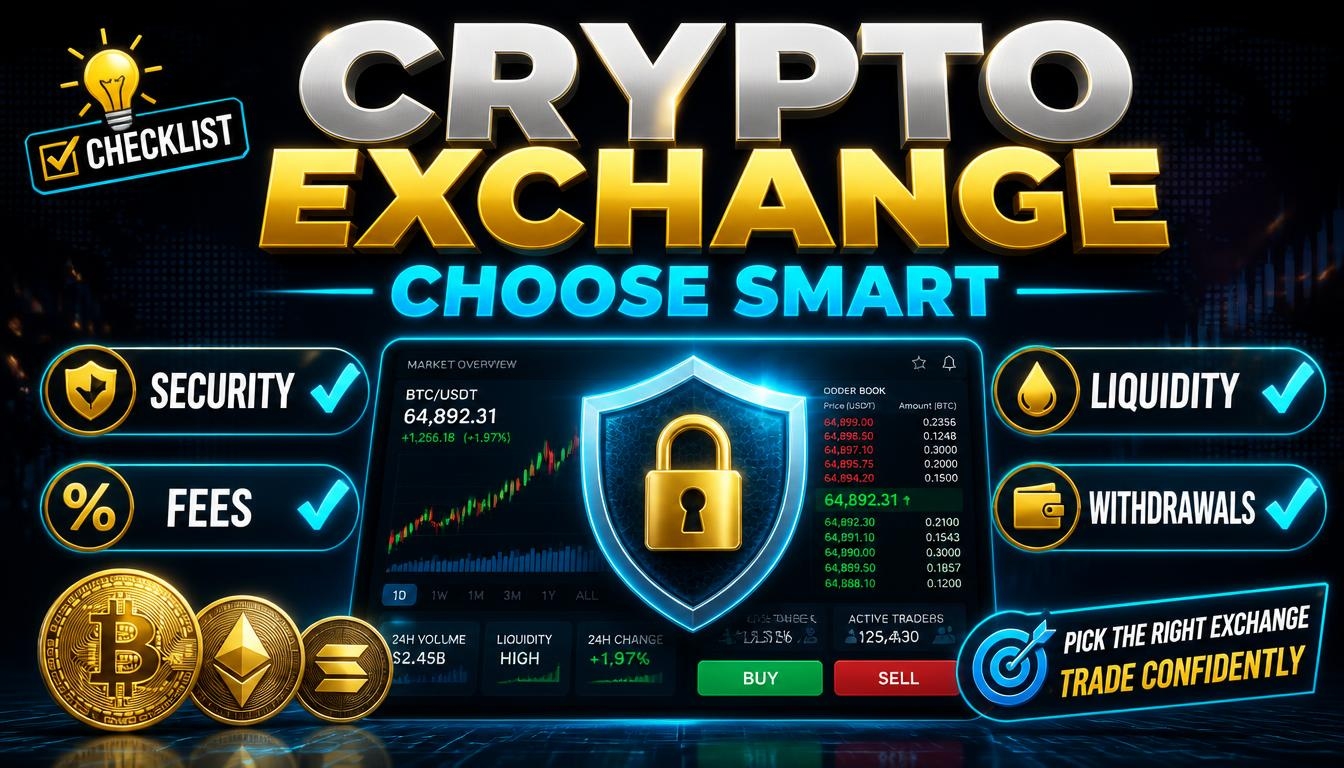
Choosing a crypto exchange is a bit like choosing a bank, except there is less protection if something goes wrong and a much wider range of quality. Some exchanges have years of operating history and strong controls. Others are a website and a promise. A few minutes of checking before you deposit anything is the cheapest protection you will ever buy.
Two kinds of exchange
A centralized exchange (CEX) is a company. You create an account, and it holds your crypto and executes trades for you. A decentralized exchange (DEX) is software that runs on a blockchain; you trade directly from your own wallet and keep control of your keys. A CEX is easier to start with. A DEX gives you more control and also more ways to make an expensive mistake. Most beginners start with a CEX, so this guide focuses on those.
The checklist
1. Regulation and where it operates. Check whether the exchange is licensed or registered in your country and whether it is allowed to serve you. Rules differ a lot between countries, and an exchange that is not permitted to serve you can restrict your account later.
2. Security features. Look for authentication by app or hardware security key rather than SMS, withdrawal address whitelisting, an anti-phishing code for emails and clear device and login alerts. Good exchanges explain how they store funds; keeping most customer assets offline is a common practice, though no method is perfect.
3. Track record and honesty. Search for the exchange’s history of security incidents and how it responded. Every large platform is a target, so an incident alone is not the whole story. How quickly it informed users, how it handled withdrawals and what it did for affected customers say a lot.
4. Proof of reserves, with caution. Some exchanges publish proof that they hold customer assets. That is better than nothing, but read what is covered and who checked it. A snapshot is not a guarantee.
5. Fees. Add up everything: trading fees, the spread between buying and selling prices, deposit and withdrawal charges and the network fee for moving coins. A platform that charges a small trading fee but a large withdrawal fee can cost you more than one with a slightly higher trading fee and cheap withdrawals.
6. Supported coins and payment methods. Check that the exchange lists what you want, supports a payment method that works in your country and does not make deposits slow or costly.
7. Liquidity. On a busy market you get close to the price you see. On a thin one you can lose money to the gap between buying and selling prices. Look at the order book or test with a small trade.
8. Withdrawals. The most important test is whether you can take your money out, promptly and without surprises. Check limits, delays and whether withdrawals are ever paused. Try a small withdrawal early.
9. Support and usability. Can you reach a person? Is the interface clear enough that you will not send the wrong thing to the wrong place? Confusing screens cause expensive mistakes.
Habits that protect you on any exchange
- Keep only what you plan to trade on the exchange. Long-term holdings are safer in a wallet you control.
- Use a unique password and a password manager.
- Use a dedicated email address for the account.
- Test deposits and withdrawals with a small amount before moving a large one.
- Keep records of trades and transfers; you may need them for taxes.
- Type the address yourself or use a bookmark. Do not trust links in messages or ads.
Be honest about your own needs
A new user who wants to buy and hold a few well-known coins needs different things from an active trader. Simple and trustworthy beats feature-rich if you are just starting. You can always add a second exchange later.
Ready to compare? Browse our Crypto Exchanges category. Rankings on LA Rank combine visitors measured by our tracking pixel, outbound clicks from our users, member upvotes and member reviews. That tells you about interest and community feedback, not about safety or solvency, so do your own checks. A green Verified badge means the owner installed the pixel, and sites marked No pixel appear below those with measured traffic. We list exchanges but do not endorse them.